Facts About Ayutthaya That Will Surprise You
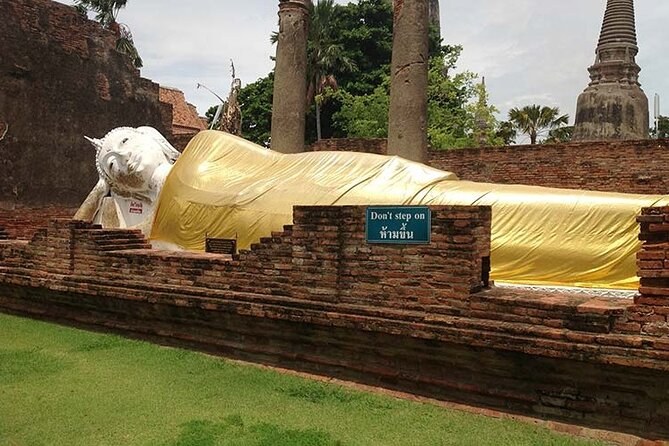
The short answer
A single Buddha image here carried 343 kilograms of gold until it was melted in 1767. A temple was founded on the spot where two brothers killed each other over a throne. Thieves broke into a crypt in 1957 and the clean-up recovered more than a hundred kilograms of gold. And the capital most visitors think is one temple ran for 416 years and traded with half the world.
1. One statue held 343 kilograms of gold
The Phra Si Sanphet image stood sixteen metres high on an eight-metre pedestal, with a bronze core of roughly sixty-four tonnes under about 343 kilograms of gold. It took more than three years to make. In 1767 the building was set alight and the gold was melted off it, which is why the temple that carries its name has an empty hall at the centre.
2. A temple built on a duel between two brothers
Wat Ratchaburana was founded in 1424 by King Borommarachathirat II on the cremation site of his two elder brothers. They had fought each other to death over the succession to their father, Intha Racha. The younger brother took the throne and built a monastery on the ground where they burned.
3. A hundred kilograms of gold came out of one crypt
In 1957 thieves broke into the crypt beneath that same prang. The official excavation that followed recovered more than 2,000 objects, over 100,000 votive tablets and more than 100 kilograms of gold, along with rare Buddha images. It is in the Chao Sam Phraya National Museum now, and the crypt still holds faded frescoes.
4. The city was one of the largest in the world
European visitors in the sixteenth century ranked Ayutthaya with Vijayanagara and Ming China among the great powers of Asia. By about 1600 the kingdom held an estimated two and a half million people, and the island carried Portuguese, Dutch, French, Japanese and Chinese quarters outside its walls.
5. It was a seaport eighty kilometres inland
Ocean-going ships came up the Chao Phraya River to the island. That is the whole reason the site was chosen: three rivers meeting, a canal cut across a meander to close the loop, and a moat nobody had to dig. The geography that made it rich is set out on the map and layout page.
6. The siege lasted fourteen months
Ayutthaya did not fall quickly. The Burmese army invested the city and held it for fourteen months before it fell on 7 April 1767. Within fifteen years the seat of government had moved downriver to what became Bangkok, and nothing was ever rebuilt here.
7. The three chedi are three kings, in order
The first two at Wat Phra Si Sanphet were raised in 1492 by Ramathibodi II, for his father Borommatrailokkanat and his brother Borommaracha III. The third came in 1529 for Ramathibodi II himself. Two of the three came down in 1767; all were restored in 1956.
8. The royal temple had no monks
From 1448 Wat Phra Si Sanphet was used by the royal family alone. It is the model, three centuries later, for Wat Phra Kaew inside the Grand Palace in Bangkok — which also has no resident monks. Details are on the Wat Phra Si Sanphet page.
9. One temple here was built to look like Angkor
Wat Chaiwatthanaram, raised by King Prasat Thong in 1630, uses Khmer prangs rather than Thai chedi. Its name signifies a long reign and a glorious age, and some scholars read it as a monument to Ayutthaya's victory over Longvek as much as an act of merit for the king's mother.
10. Its passage once held 120 Buddhas
The cross-shaped passage joining that temple's eight chapels carried 120 seated Buddha images. What survives is bases, laps and the occasional torso, in a long line down both sides. Most visitors photograph the towers and never walk it. The full account is on the Wat Chaiwatthanaram page.
11. In 2011 the whole thing was under two metres of water
The floods put Wat Chaiwatthanaram under two metres of water and did serious damage. The repair cost 200 million baht. The rivers that made the city are the same rivers that periodically take it back — the rainfall figures are on the weather page.
12. The great chedi is a victory monument
Wat Yai Chai Mongkhon was founded by U Thong in 1357 as a forest monastery. Its great chedi — the tallest in the city, and the one you can climb — was raised in 1592 on the order of King Naresuan to mark his victory over the Burmese crown prince.
13. The royal palace you visit is Victorian
Prasat Thong built at Bang Pa-In in 1632, but the site was abandoned and overgrown. Almost everything standing there now went up between 1872 and 1889 under King Chulalongkorn, which is why a "summer palace" outside a fourteenth-century capital has a Chinese throne hall and European facades.
14. A queen drowned within sight of help
On 31 May 1880 the royal barge carrying Queen Sunanda Kumariratana and Princess Kannabhorn Bejaratana capsized. Both drowned. King Chulalongkorn built a marble memorial to them in the palace grounds, and it is still there.
The ones that hold up as facts, and the one that does not
| Claim | Status |
|---|---|
| Inscribed by UNESCO in 1991, criterion (iii) | On the record |
| Founded 4 March 1351, fell 7 April 1767 | On the record |
| 343 kg of gold on the Phra Si Sanphet image | On the record |
| How the Buddha head came to sit in the tree | Not documented — the tree grew around it, and that is all anyone can say |
That last row is worth a moment. The most photographed object in Thailand has no documented origin story, and every version you will hear told at the site is somebody's reconstruction. The one thing that is certain is the direction of travel: the tree grew around the head, not the other way about.
Where each of these is, if you want to see them
You can stand in front of eleven of the fourteen in a single day, and you will pass most of them without knowing which is which unless somebody tells you. If you are planning your own route, the order to walk them in is set out on temples and what to see.
The two you cannot reach on foot are Wat Yai Chai Mongkhon, beyond the rivers, and Bang Pa-In Royal Palace about 20 km south. Whether your day includes them is the single biggest difference between one itinerary and the next, so check before you book rather than after.
What to do with all this
- Stand in the empty wihan at Wat Phra Si Sanphet and look up sixteen metres.
- Cross the road from Wat Mahathat to Wat Ratchaburana, which most tours skip.
- Walk the cross-shaped passage at Wat Chaiwatthanaram rather than cutting across.
- Climb the chedi at Wat Yai Chai Mongkhon if your day reaches it.
All four take minutes and none of them is signposted as the thing to do. Where each sits is on temples and what to see, and the days that reach them are compared across the guided tours of Ayutthaya listings.
Most of what makes Ayutthaya remarkable is invisible without somebody to point at it: an empty floor, a stucco tower, a line of bases where 120 statues sat. That is the honest argument for a guide, and it is the one the fares on Ayutthaya Tours are really buying.
Days with a guide who can point at all this
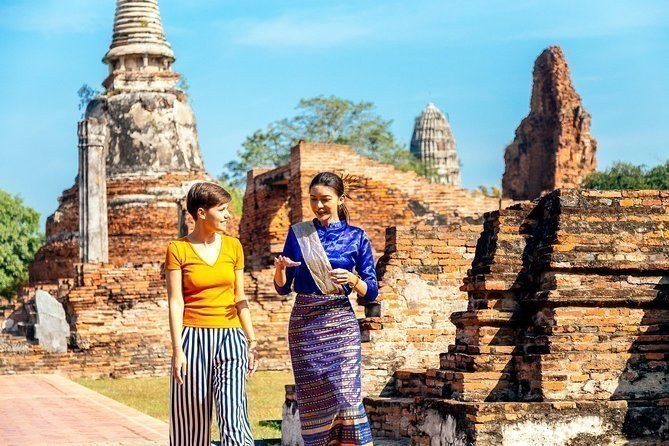
The Ultimate Ancient city of Ayutthaya Private Day Trip
Eight unhurried hours with your own guide and the tickets already bought.
From $267 per person
Check Availability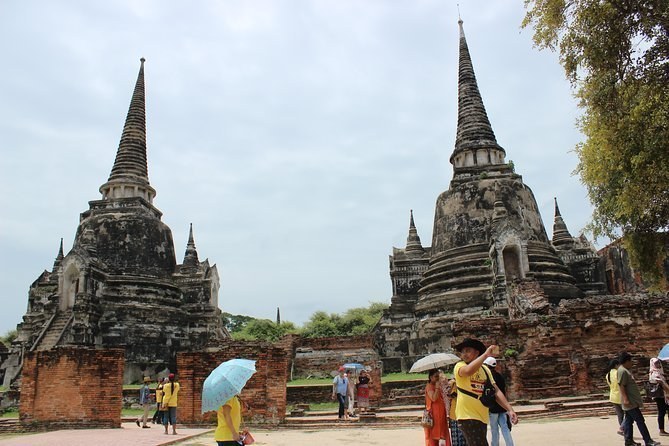
Ancient City UNESCO Heritage Ayutthaya Private Guided Day Tour
Your own car and guide for eight hours, tickets and taxes inside the fare.
From $104 per person
Check Availability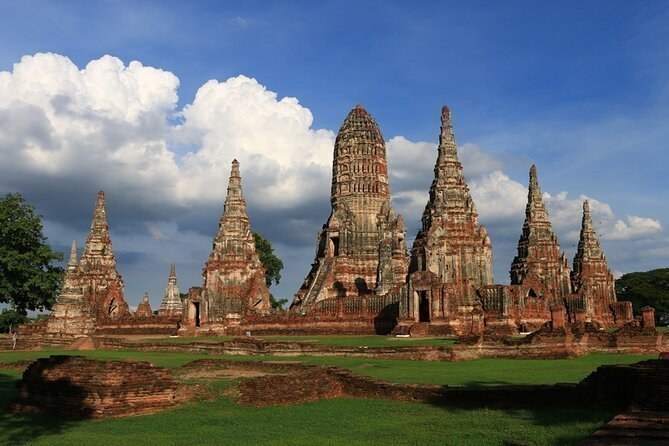
Private Ayutthaya Day Tour from Bangkok
Hotel pickup, six stops, lunch and Bang Pa-In on the way home.
From $167 per person
Check Availability