Ayutthaya Temples and What to See
Eight places, in the order most days take them. Six sit inside the river loop and you can walk between them; two do not, which is the single fact that separates one itinerary from another. Every Ayutthaya temple tour on this list reaches at least four, so what you are really choosing between is which four.
Each entry below follows the same three lines — what it is, what to look for, and what is worth knowing before you stand in front of it — so you can compare them rather than read them.
Wat Mahathat
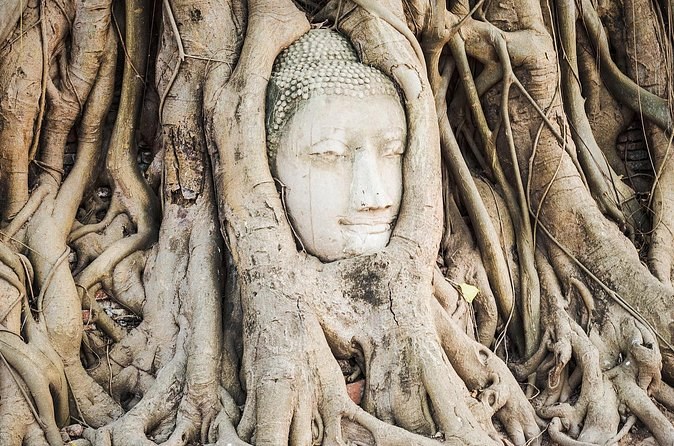
What it is. Built in 1374 by King Borommarachathirat I to hold a jewelled reliquary, and enlarged ten years later by his nephew Ramesuan, who gave it the name it still carries. It sits in the middle of the island, across the road from Wat Ratchaburana.
What to look for. The sandstone Buddha head held in the roots of a bodhi tree, about a metre off the ground. It is the most photographed object in the city, and the queue you join for it moves quickly. Beyond it you will find the stumps of the prang and rows of headless seated Buddhas along the cloister walls.
Worth knowing. Crouch or kneel to photograph the head, so that your own head is never higher than the Buddha's. The rule is signposted and staff enforce it.
Give it 45 minutes.
Wat Phra Si Sanphet
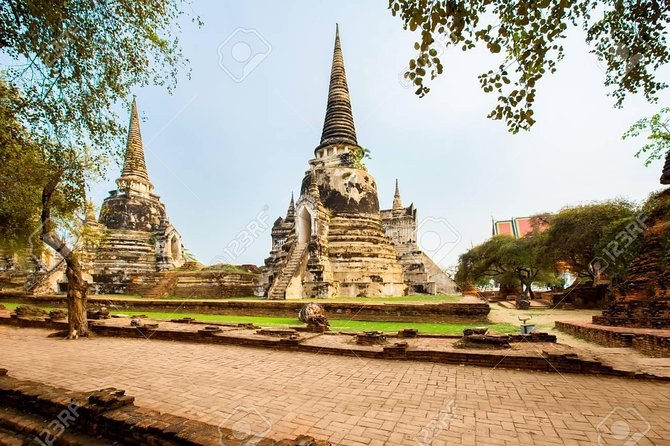
What it is. The royal temple, on the ground where U Thong built the first palace in 1350. From 1448 it had no resident monks and was used by the royal family alone — the model, three centuries later, for Wat Phra Kaew in Bangkok.
What to look for. Three restored chedi in a row, holding the ashes of three kings. They are the silhouette every photograph of Ayutthaya uses, and the ruined palace platforms behind them are worth ten minutes of your time that almost nobody gives them.
Worth knowing. The empty wihan beside the chedi once held a sixteen-metre Buddha covered in gold. Stand where it stood and look up: it is the best way to feel the scale of what was lost.
Give it 45 minutes.
Wat Ratchaburana
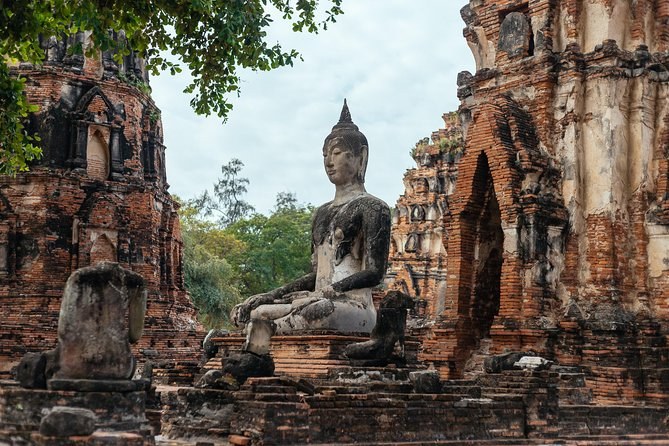
What it is. Founded in 1424 by King Borommarachathirat II on the cremation site of his two elder brothers, who had killed each other in a duel over the succession to their father Intha Racha. It stands directly opposite Wat Mahathat.
What to look for. The central prang, which still carries much of its stucco, and the crypt beneath it. The crypt holds faded frescoes that are among the few survivals of early Ayutthaya painting, and you reach it down steep stairs.
Worth knowing. This is where the 1957 robbery happened, and where the excavation that followed recovered more than a hundred kilograms of gold. If you want to see it, the treasure is in the Chao Sam Phraya National Museum a short distance away.
Give it 30 minutes.
Wihan Phra Mongkhon Bophit
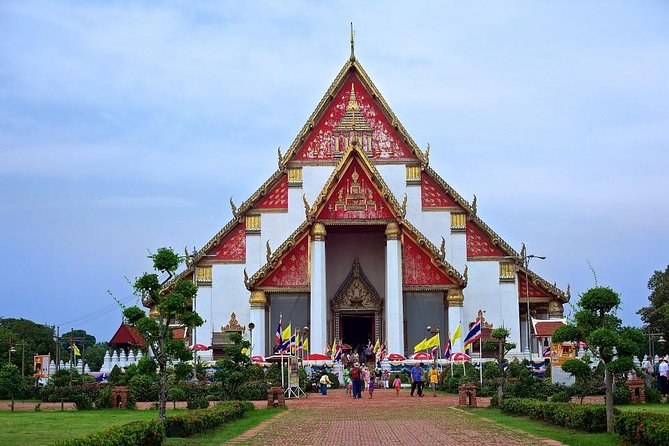
What it is. The one large building on the island with a roof on it. The hall is a modern restoration around a very old bronze Buddha, and it stands immediately south of Wat Phra Si Sanphet.
What to look for. The seated Buddha inside, one of the largest bronze images in Thailand, in a dim hall that will come as a shock after an hour of open ground. People come here to make offerings rather than to sightsee, so keep your voice down.
Worth knowing. It is a working temple, so cover your shoulders and knees and take your shoes off where the signs ask. The market stalls outside are the best place on the island to buy roti sai mai.
Give it 20 minutes.
Wat Lokayasutharam
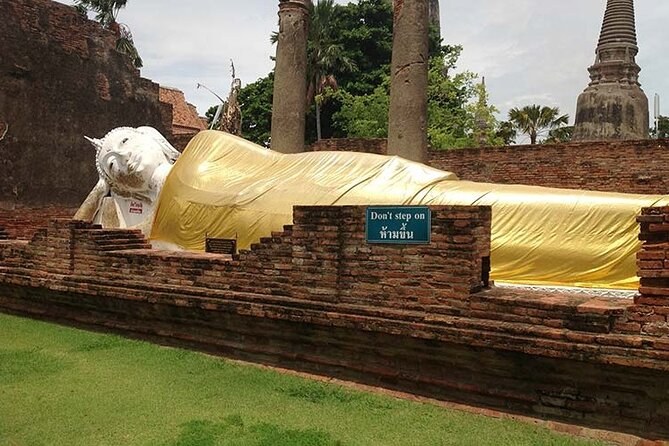
What it is. A ruined monastery in the west of the island whose reclining Buddha survives in the open air, on a platform with no building around it. There is no ticket booth here.
What to look for. The reclining Buddha itself, laid out on its side with its head on a lotus and a saffron robe draped over it. You will usually find incense and flowers left along the length of it by local visitors.
Worth knowing. You will find it quieter than anywhere else on the island, and the light is best early in the morning. Because it is free and slightly off the main circuit some short tours skip it — check your itinerary if you want it.
Give it 20 minutes.
Wat Chaiwatthanaram
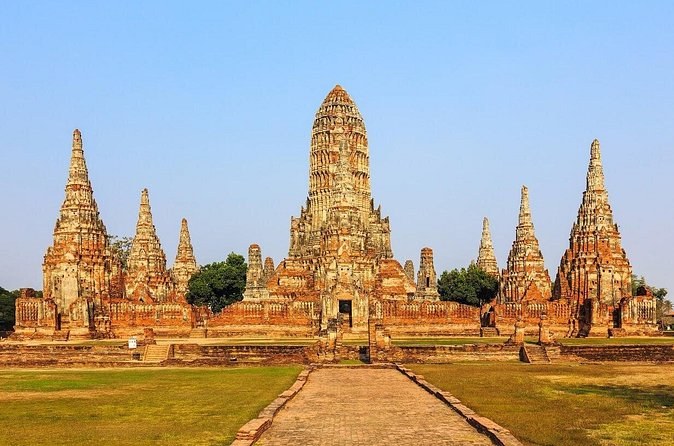
What it is. King Prasat Thong's temple of 1630, built in Khmer style on the west bank of the Chao Phraya River, outside the island. It has its own page.
What to look for. A 35-metre central prang with four smaller prangs around it and eight chedi-shaped chapels on a raised platform. The cross-shaped passage that joins them once held 120 seated Buddha images.
Worth knowing. It faces the water, which is why it is the temple every sunset itinerary ends at. If you want it, check that your day crosses the river — that is exactly why some leave it out.
Give it 45–60 minutes.
Wat Yai Chai Mongkhon
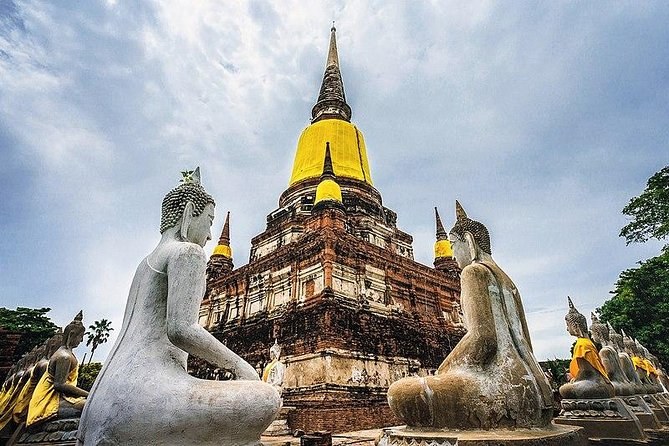
What it is. Founded by King U Thong in 1357 as a forest monastery for newly ordained monks. Its great chedi was raised in 1592 on the order of King Naresuan, to mark his victory over the Burmese crown prince, and it is the tallest in the city.
What to look for. The chedi, which you can climb, and the ranks of seated Buddhas in yellow sashes that ring its base. Look for the long reclining Buddha in the grounds as well.
Worth knowing. It sits beyond the ring of rivers, so you will reach it on the drive in or out rather than on a walking circuit. It is a working monastery and is busy with Thai visitors.
Give it 45 minutes.
Bang Pa-In Royal Palace
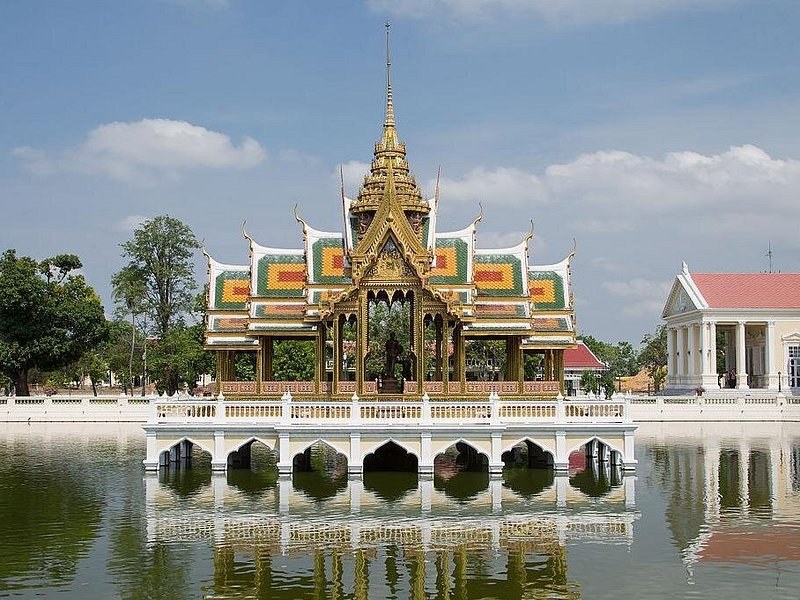
What it is. Not part of the archaeological park at all. King Prasat Thong built here in 1632; the site was abandoned, and almost everything standing was put up between 1872 and 1889 by King Chulalongkorn. It is about 20 km south, on the road back to Bangkok.
What to look for. The Aisawan Thiphya-Art pavilion in the middle of its pond, the Chinese-style throne hall Phra Thinang Wehart Chamrun, and the painted lookout tower Ho Withun Thasana. A marble memorial records Queen Sunanda Kumariratana, who drowned when the royal barge capsized on 31 May 1880.
Worth knowing. The dress code is stricter than the temples': long trousers and covered shoulders, so pack for it if your day includes the palace. Buggies cross the grounds and are not usually inside a tour fare.
Give it 60–90 minutes.
How much of this a day actually reaches
Nothing here covers all eight, so the question is which four or five you want. The coach days take four, the private days five or six, and only the longest add both Bang Pa-In Royal Palace and Wat Chaiwatthanaram. The figures below are the hours each listing states on the ground, as distinct from the length of your day — and they are the number to compare, because a pair of days that run the same length can leave you very different amounts of time out of the vehicle.
| Tour | Hours at the ruins | From |
|---|---|---|
| UNESCO's Ayutthaya Historical Park: Full-Day Tour from Bangkok | about 3 hours | From $30 |
| From Bangkok: Ayutthaya Temples Guided Tour with Lunch | about 3 hours | From $33 |
| Half-Day Ayutthaya City Cultural Bike Tour | the full 3 hours | From $46 |
| Bangkok: Ayutthaya, Railway & Floating Markets Full-Day Tour | about 1.5 hours | From $65 |
| From Bangkok: Ayutthaya Day Tour by Bus with River Cruise | about 1.75 hours | From $76 |
| Ancient City UNESCO Heritage Ayutthaya Private Guided Day Tour | about 2 hours | From $104 |
| Private Excursion to Ayutthaya, UNESCO World Heritage site with Boat Tour | about 5 hours | From $152 |
| Private Ayutthaya Day Tour from Bangkok | about 3.5 hours | From $167 |
Want the six on the island in one morning?
The half-day ride starts in the old city and covers three of them without a commute; the full days from Bangkok trade two hours of driving for the west bank and the palace.
If you have one day, take the centre and the west of the island and let the outliers go. If you have two, put Wat Chaiwatthanaram into the second afternoon and give yourself the light for it.
Next: the two monuments with pages of their own are Wat Phra Si Sanphet and Wat Chaiwatthanaram; the story behind them is on the history of Ayutthaya, and the fares are on Ayutthaya Tours.