The Best Time to Visit Ayutthaya
Ayutthaya is open all year and nothing here closes for a season. What changes is how comfortable the day is, how many people are in your photographs, and whether the rivers are high. Heat decides more than rain does, which is the opposite of what most visitors assume.
The short version
Come between November and February if you can. December and January are the driest and coolest months of the year, and they are also the busiest, which is the trade. Avoid the middle of the day from March to May. The wet season from May to October is far better than its reputation and much quieter.
Why heat matters more here than rain
The ruins are roofless brick standing on cropped grass, with the trees at the edges of the sites rather than over the paths. There is nowhere in the central park to get out of the sun. From March to May the average high sits between 35.4 and 35.9°C, and that turns a five-hour walking plan into a three-hour one.
Rain behaves quite differently from what people expect. It arrives in heavy bursts rather than steady drizzle, it drops the temperature usefully, and nothing here closes for it. A wet afternoon costs you an hour; a hot noon costs you the afternoon.
The cool season: November to February
Highs from 30.0 to 33.3°C, nights down to about 17°C in December and January, and almost no rain at all — December records 0.8 mm across the whole month and January 2.4 mm. This is the only stretch of the year when you can comfortably walk the whole island rather than being driven between quarters.
It is also when everybody else comes. Tours fill earlier, the ticket booths queue, and the island core has people in every frame between about ten and four. Book further ahead than you would otherwise, especially for the private days.
The hot season: March to May
March 35.4°C, April 35.9°C, May 34.3°C, and the nights stop cooling off. This is the season people underestimate, because the numbers do not sound extreme until you are standing on brick with no shade at one in the afternoon.
It is perfectly visitable if you shape the day around it: temples early, a long lunch indoors, and the outliers in an air-conditioned vehicle. This is the one season where the guided days have a real practical advantage over doing it yourself, because the car is somewhere to be between stops.
The wet season: June to October
Cooler by day than April, green underfoot, and far fewer people. August is the wettest month at 260 mm, with September close behind at 213.9 mm, and the year's total is 1,423.8 mm. The rain comes in bursts and the ruins photograph better against a sky that has something in it.
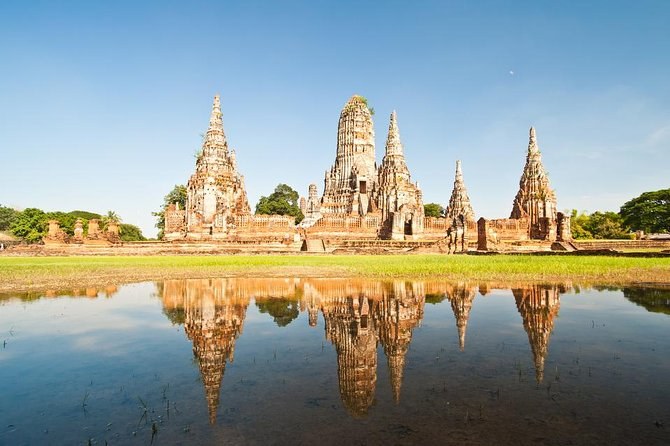
The thing to watch is water rather than weather. The rivers run highest from August to October, and in 2011 Wat Chaiwatthanaram stood under two metres of floodwater. In an ordinary year that is simply not an issue; in a heavy one, check conditions before you travel.
Month by month, at a glance
| Month | High | Rain | What it means |
|---|---|---|---|
| January | 31.0°C | 2.4 mm | The driest and one of the coolest — and the busiest |
| February | 33.3°C | 18.8 mm | Still dry; afternoons are already asking for a hat |
| March | 35.4°C | 43.5 mm | Heat sets in; plan the temples for the morning |
| April | 35.9°C | 67.9 mm | The hottest month, and Songkran crowds the roads |
| May | 34.3°C | 208.0 mm | The monsoon arrives; a degree cooler and better light |
| June–July | 32°C | 181–223 mm | Wet, green and quiet; front-load the day |
| August–September | 31°C | 214–260 mm | The wettest of the year, rivers at their highest |
| October | 31.3°C | 167.6 mm | The monsoon eases; the ground begins to dry |
| November | 30.7°C | 37.1 mm | The cool season starts, and Loy Krathong falls here |
| December | 30.0°C | 0.8 mm | Effectively no rain and the coolest days of the year |
Figures are Thai Meteorological Department 30-year normals for the province, and the full table with every month separated out is on the weather page.
Which month for photographs?
November and December for clean light and dry ground, if you can live with people in the frame. June to September if you want the place to yourself and a sky with weather in it — the brick reads much better against cloud than against a bleached blue.
In any month the two hours that matter are the first after opening and the last before the light goes. What to shoot in each is set out in the photographer's guide.
Which month for crowds?
June through September, comfortably. The wet season keeps the coach numbers down, and a Tuesday in low season can leave you close to alone at Wat Ratchaburana or Wat Lokayasutharam. The cool season is the opposite, and the middle of the day in the island core is where it is felt.
Whatever the month, being on the island at opening buys you an hour and a half before the first coaches from Bangkok can physically arrive. That single move beats any choice of season.
Songkran, and whether to plan around it
Thai New Year falls in the middle of April, which is also the hottest month. The country travels, the roads are busier and the temples are busier with Thai visitors as well as foreign ones. It is a genuinely good time to be in Thailand and a mediocre time to be walking around unshaded ruins.
If your dates are fixed and they land on Songkran, take a day with an air-conditioned vehicle and an early start rather than trying to do it independently.
Loy Krathong, and the one night the water is the attraction
Loy Krathong falls in November, when small decorated floats are set on the water after dark. In a city built on three rivers that is a different proposition from anywhere else in the country, and it coincides with the start of the cool, dry season.
It is also the point in the year when staying the night in Ayutthaya makes the most sense, because a day trip from Bangkok is gone before anything happens.
Does the season change which tour to book?
| Season | Book | Why |
|---|---|---|
| November–February | Anything, but book early | Comfortable enough to walk; the private days fill first |
| March–May | A day with a vehicle between stops | Air conditioning between temples is the difference between four and two |
| June–October | Whatever you like | Cooler, quieter, and rain rarely costs more than an hour |
| Any month, if photographs matter | A private day with an early start | Only a start time of your own gets the empty first hour |
How does the season change the light?
More than the temperature does, for anyone carrying a camera. In the cool, dry months the sky is a hard clean blue and the brick reads slightly flat under it; in the wet season there is cloud with structure in it, and the red laterite of the ruins comes forward against grey in a way it never does against blue.
The other seasonal difference is the ground. From June to October the grass between the monuments is genuinely green, and Wat Ratchaburana and Wat Phra Si Sanphet both sit better in that setting than they do on the bleached, straw-coloured lawns of March. If your photographs matter more than your comfort, the wet season is the underrated answer.
Is there a month to avoid outright?
No, and that is worth saying plainly, because plenty of pages will tell you otherwise. Nothing here closes for a season, the ruins are open ground in every month, and the operators run their full timetables through the monsoon. What varies is comfort, crowding and light rather than access.
If you are pinned to a single week, the useful question is not whether to come but how to shape the day once you are here. In the hot months that means an early start and a vehicle; in the wet months it means an eye on the forecast and a willingness to move an hour around a downpour.
What never changes
Shoulders and knees covered, at every temple, in every month. Flat shoes, because the ground is uneven brick and grass whatever the weather is doing. And more water than you think, which is as true in December as it is in April.
The rest of the practical detail is on planning a visit, and the days that suit each season are compared on Ayutthaya Tours.
Frequently asked questions
What is the best month to visit Ayutthaya?
Is April too hot for Ayutthaya?
Does the rainy season spoil a visit?
Will flooding affect my trip?
When is Ayutthaya least crowded?
Should I plan around Songkran or Loy Krathong?
Days that suit the season you are in
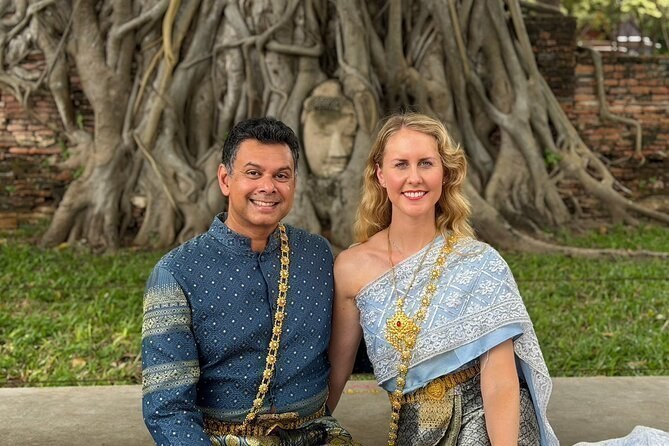
Private Excursion to Ayutthaya, UNESCO World Heritage site with Boat Tour
A private boat around the historical park, four temples and Thai desserts.
From $152 per person
Check Availability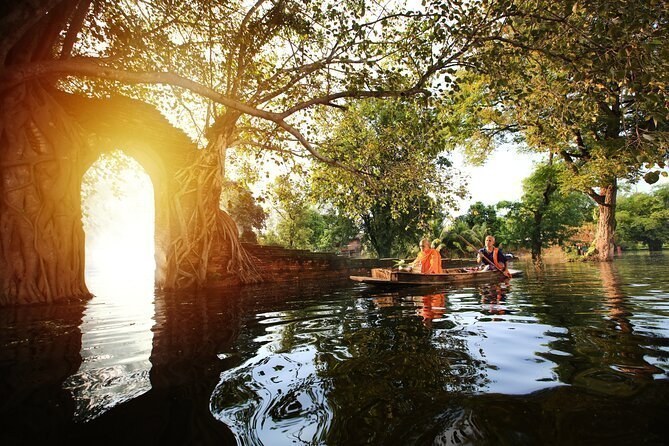
Ayutthaya Sunset Boat & UNESCO Temples: Multi-language private tour from Bangkok
Six temples and a private boat round the island as the light goes.
From $190 per person
Check Availability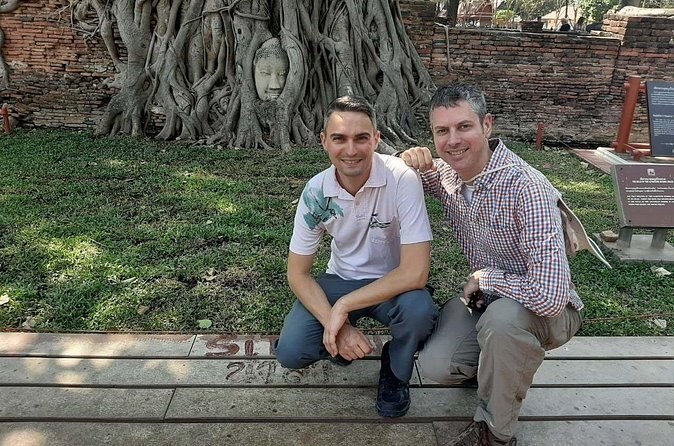
Private Ayutthaya Day Tour from Bangkok With Lunch
A private nine-hour run with hotel pickup and the admissions covered.
From $167 per person
Check Availability